On 2 October 2026, Anthropic announced Claude Frontier Academy, a training program without clear precedent among frontier AI labs: a $100 million commitment to prepare 10,000 Frontier Deployed Engineers (FDEs) by the end of 2027. The official post on anthropic.com cast deployment talent — not model access — as the decisive bottleneck for enterprises moving from prototypes to production systems.
Steve Corfield, Anthropic’s global head of business development and partnerships, summarized the thesis: a small team of high-agency people with Claude access and deep business understanding can transform an entire company. The hard part, he said, is building that depth of talent — engineers with the highest AI fluency who can take Claude from an idea to a production system that speeds processes and creates new products.
The Academy’s first program is the Frontier Deployed Engineer Residency, modeled on medical training. Engineers learn from practitioners, practice on realistic cases, and are assessed before they work alone. The stated goal is agentic systems that change how a business runs, from redesigned processes to new services.
The target profile is hands-on software engineers with strong fundamentals, a record of building with language models, experience helping others adopt AI, and a habit of tackling their organization’s most important problems. Organizations nominate their strongest people; each participant arrives with a named Claude project to lead on return. Prior agent-building experience is not required.
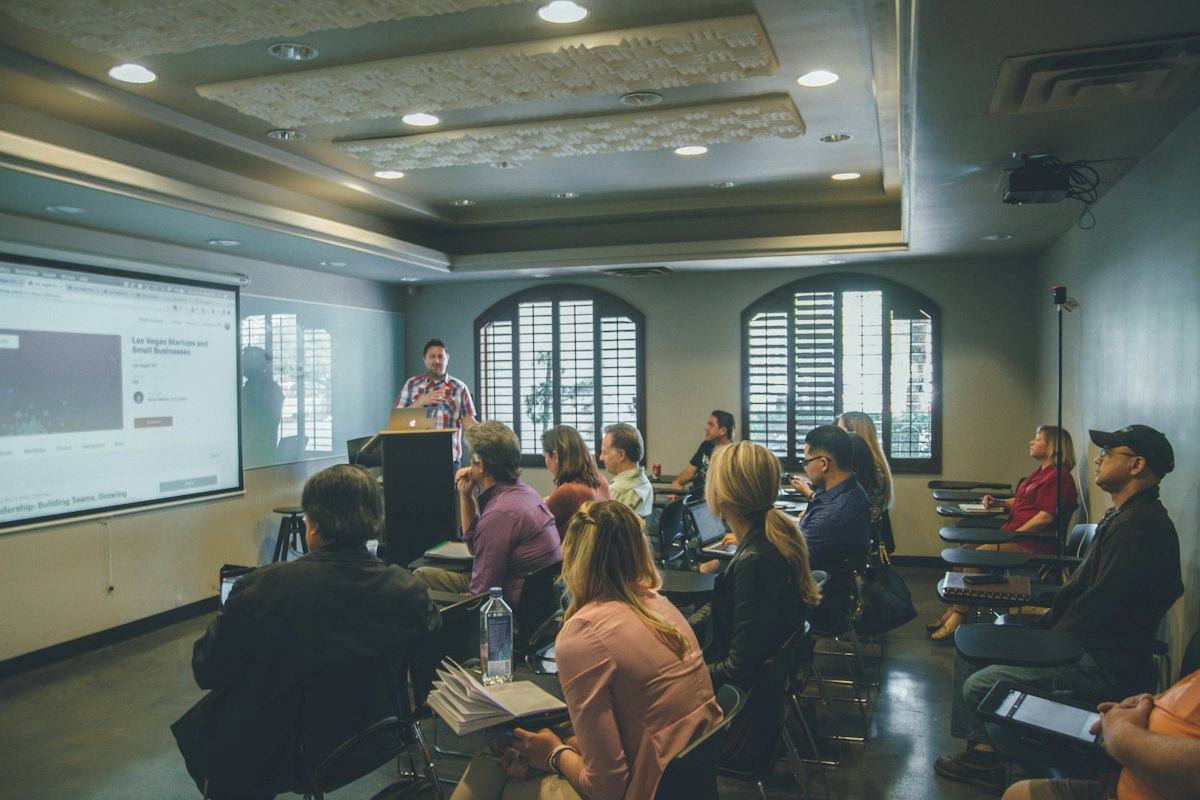
The path starts with a multi-day in-person program with Anthropic engineers and licensed instructors. Participants work through a simulated enterprise deployment — from the right use case through security review to handover — and finish with a graded practical on a new scenario. Those who pass earn the Claude Resident Engineer badge and enter the 12-week residency.
During those 12 weeks they lead a real Claude use case at their own organization, supported by Anthropic engineers and learning from their cohort. They are assessed again at the end; those who pass earn the Claude Frontier Deployed Engineer badge. The first credentials are expected in early 2027.
Initial cohorts are already running in San Francisco, New York and London. First-wave organizations include Accenture, Bain, Capgemini, Commonwealth Bank of Australia, Deloitte, McKinsey, Morgan Stanley and Novo Nordisk. Participation is by nomination through an Anthropic account team or Partner Account Manager.
Leaders from those firms stress the same gap: the shortage is not lightweight certifications but people who can solve end-to-end real problems. Accenture spoke of translating AI ambition into governed enterprise impact; Bain, of moving from experimentation to scale; Capgemini, of delivery excellence clients recognize immediately; Commonwealth Bank, of up to 3× more code changes with AI tools and of going deeper on building, securing and shipping.
Deloitte and McKinsey framed the residency as scaling a discipline already tested in the field and as the bar for applying Claude in service of business outcomes. Novo Nordisk linked the program to Claude Science in R&D, frontier models in software development, and Anthropic engineers working alongside pharmaceutical scientists.
Claude Frontier Academy builds on the Claude Partner Network: professionals across about 46,000 firms, more than 175,000 Claude certifications, and nearly 4,000 people who completed Basecamp, the immersive program aligned with Anthropic’s Applied AI onboarding curriculum. The Academy targets the people who will lead the work, not only occasional API users.
The move fits a market where access to capable models is no longer enough. Deploying an enterprise agent requires identity controls, scoped tool permissions, audit logs, evaluations, data governance, human approval steps and integration with legacy systems. Anthropic is betting that a relatively small cadre of deployment engineers can unlock much larger AI programs inside banks, consultancies and pharma companies.
Neural Pulse reads the 2 October announcement as a signal that frontier vendors now compete on implementation capacity, not only on benchmarks. Watch for the first FDE badges in 2027 and whether the residency model becomes a de facto standard for enterprise AI talent.
Beyond partnership marketing, the Academy forces Anthropic to expose how it deploys Claude internally: security reviews, handovers and adoption metrics. That know-how, packaged into badges, becomes a network asset: the more FDEs sit inside global consultancies, the harder it is for a rival to displace Claude in already “residencied” accounts.
It remains to be seen whether $100 million buys 10,000 frontier-quality engineers or dilutes into in-person logistics. Also whether employers will free their best people for twelve weeks. The bottleneck may shift from money to the time of the people companies least want to spare.
In Latin America and Spain, where many SMEs still experiment with ungoverned chatbots, the FDE model may arrive filtered through partners. Neural Pulse will watch for Spanish-language cohorts or deals with universities and hubs in Madrid, Mexico City or São Paulo before 2027.