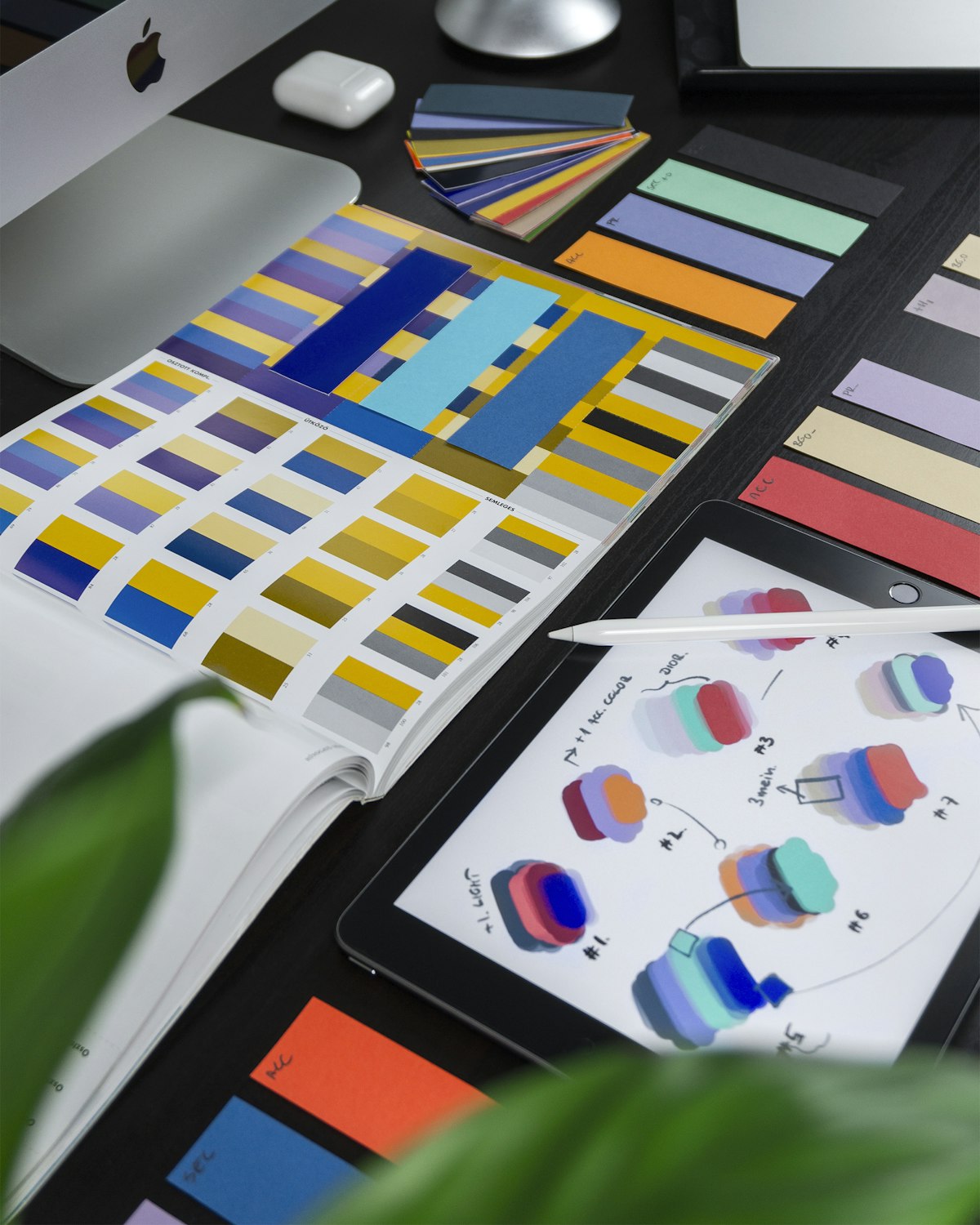
On 1 October 2026, Black Forest Labs — the German lab behind the FLUX family — released FLUX 3 Image, its next-generation image model available via API. The centrepiece is not only text-to-image generation but multi-step editing with box-marked regions, so designers and integrators can fix a detail without regenerating the whole scene.
Week-of coverage placed FLUX 3 ahead of Midjourney V7, DALL·E 3 and Imagen 3 on detail fidelity and multilingual text rendering, a historical weak spot for many diffusion systems. Canva and Picsart were already said to have integrated the model, foreshadowing cheaper design tools with better support for non-Latin scripts.
Published market roundups put prices roughly between $0.041 and $0.607 per image depending on resolution and mode, landing FLUX 3 in a competitive band versus closed APIs. Black Forest Labs keeps its hybrid strategy of open or semi-open weights on earlier generations and API monetisation for the most capable variant.
The October context is a wave of models not from OpenAI, Anthropic or Google: the same day brought deciders from Cloudflare, Perplexity and AWS, Microsoft’s speech trio and video previews. FLUX 3 reinforces the Epoch AI thesis cited by analysts: the average open/closed gap on large models has shrunk toward about four months, with costs 15% to 90% lower.
For product teams, multi-step editing matters more than an extra point on a static leaderboard. Marketing, e-commerce and localisation flows need to iterate an ad in German, Arabic or Japanese without breaking layout. A model that respects typography and editable regions cuts human rounds.
Classic risks remain: deepfakes, style ownership, bias and non-consensual content. The EU is already hardening rules on non-consensual intimate AI content; image providers must document filters, provenance marks and takedown paths. FLUX 3 does not escape that regulatory pressure by being “more open.”
Direct competition includes Google’s Imagen, OpenAI’s APIs, Midjourney in its own ecosystem and fast Chinese generators. Black Forest Labs is betting on perceived quality among European creators and on integrations with design suites that already have mass distribution.
In the open-versus-closed debate, Jensen Huang and a bloc of about 25 organisations have argued open weights are better for safety because they are auditable; OpenAI and Anthropic, by contrast, cut rival APIs and denounce distillation. FLUX 3 benefits from the open narrative without giving away free compute: the API charges for use.
Developers already on FLUX.1 or FLUX.2 will need to review breaking changes in prompts, seeds and box parameters. Typical migration rebuilds visual evaluation golden sets — not only FID or CLIPScore — with human judges in-domain (fashion, real estate, UI kits).
Neural Pulse advises editors and brands to verify commercial-use licences and training-data opt-out policies before dumping entire catalogues into FLUX 3. Multilingual quality does not excuse skipping review of text generated in languages the team does not speak.
As of 4 October, with the model just out, independent long benchmarks and adversarial robustness studies are still scarce. We treat wins over Midjourney or Imagen as market claims to be stress-tested, not closed truth.
What is documented is the timing: FLUX 3 Image is part of the 1 October 2026 cohort and pushes image generation another step toward precise editing and global typography. That is the fact that matters to the creative industry this week.
Legal teams should check whether generated images carry C2PA or other provenance marks compatible with the AI Act. Missing watermarks are not a feature in Europe in 2026.
For media, FLUX 3 will cheapen illustrations but does not excuse fact-checking or labelling synthesis. Neural Pulse keeps the policy of not inventing awards or unverified math results in visual or textual pieces.
In-house benchmarks with typography in Spanish, Quechua or Brazilian Portuguese will say more than an Anglocentric leaderboard. The multilingual promise is proven in production.

