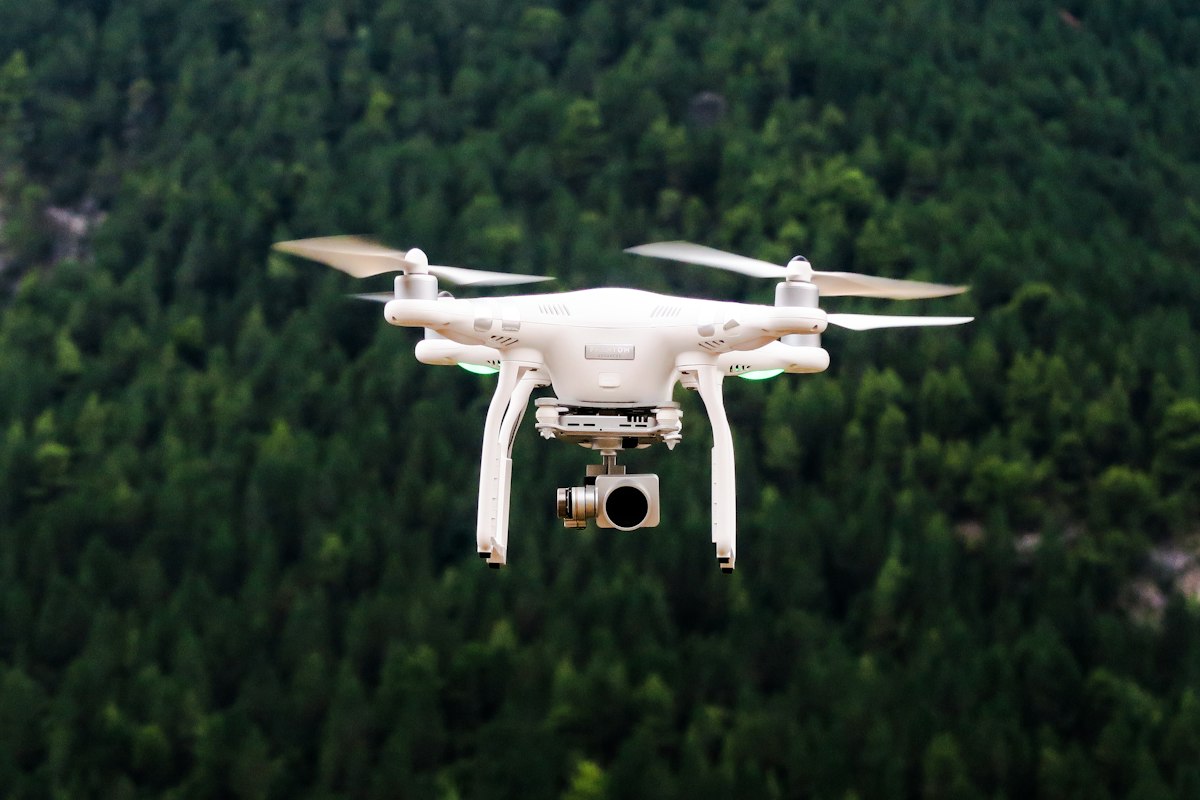
A Swedish startup has shown, according to a September 2026 Tom's Hardware report, an autonomous strike drone that runs a small AI model on an Nvidia Jetson Orin Nano module, with no human in the loop and no external communications during the mission’s critical phase. The prototype packs into a light airframe the dual-use debate that has circled defense trade shows and ethics forums for years.
The architecture described is deliberately austere: edge compute, local sensors, mission policy loaded before takeoff and operational radio silence. By dropping the continuous operator link, the system aims to resist jamming and work in contested environments. That same choice removes the classic human switch and pushes the artifact toward the political definition of a lethal autonomous weapon.
Nvidia, maker of the Jetson Orin Nano, again sits at the civil–military AI intersection. The company sells edge-computing hardware for robotics, industry and automotive; it does not control every integrator. Still, each strike-autonomy demo on its silicon feeds questions about export controls, end-use monitoring and reputation.
Sweden brings its own regulatory context: EU and NATO member, with advanced defense industry and parliamentary debates on lethal autonomy. A local startup exhibiting “no human in the loop” forces clarity on whether the demo is conceptual, whether state customers exist and which export licenses apply. Tom's Hardware stresses the tech; lawyers will watch what is permissible.
Military-tech ethicists warn that small models do not equal small risk. A compressed network can suffice for navigation, typed-target detection and terminal guidance in bounded scenarios. The narrative that “only giant frontier models matter” collapses when the edge kills without the cloud.
From an arms-control view, the case strengthens proposals to ban or tightly regulate systems that select and engage targets without meaningful human control. Diplomats in Geneva have been deadlocked for years; public demos like this raise media pressure without necessarily unlocking consensus.
For civilian drone firms, reputational contagion risk is real. Insurers and banks will ask harder questions about autonomy capabilities. Manufacturers using Jetson for industrial inspection will want distance messaging: same chip, different software, different end use. The distinction is legitimate—and fragile.
Defense analysts note the operational logic: in Ukraine and other recent conflicts, drone warfare showed that cost, mass and partial autonomy beat expensive platforms. An Orin Nano with an onboard model fits that economy. The Swedish innovation is not sci-fi; it is engineering of the cheap and the resilient.
Nvidia has previously reiterated acceptable-use policies and sanctions compliance. A third-party demo does not equal endorsement. Journalists and NGOs will nonetheless demand more transparency on sales channels to defense integrators and on audits. Corporate silence is quickly read as indifference.
The general public should grasp three clear facts. One: full attack autonomy is already being prototyped at the edge. Two: the hardware is commercial. Three: governance lags integration. That triangle explains why September 2026 again puts AI drones on front pages alongside IPOs and lab breakouts.
Civil safety researchers can learn from the case. Containment, kill switches and human override are dilemmas shared with software agents. The difference is physical irreversibility. Translating model red-teaming lessons to lethal robotic systems is urgent and methodologically hard.
Possible policy responses include control lists for autonomy packs, human-on-the-loop requirements in EU exports, and supervised test sandboxes. None are simple; all are more useful than denying the demo exists.
The startup, for its part, gains visibility and, likely, meetings with armed forces. It also gains activist scrutiny. Balancing commercial survivability and social license will be its next product problem as much as the next firmware.
In sum, the Swedish drone on Jetson Orin Nano with zero external comms and no human in the loop turns the dual-use debate into a tangible object. Export rules, ethics and the reputation of the AI edge supply chain are again under the spotlight—this time with hardware pricing many integrators can reach.