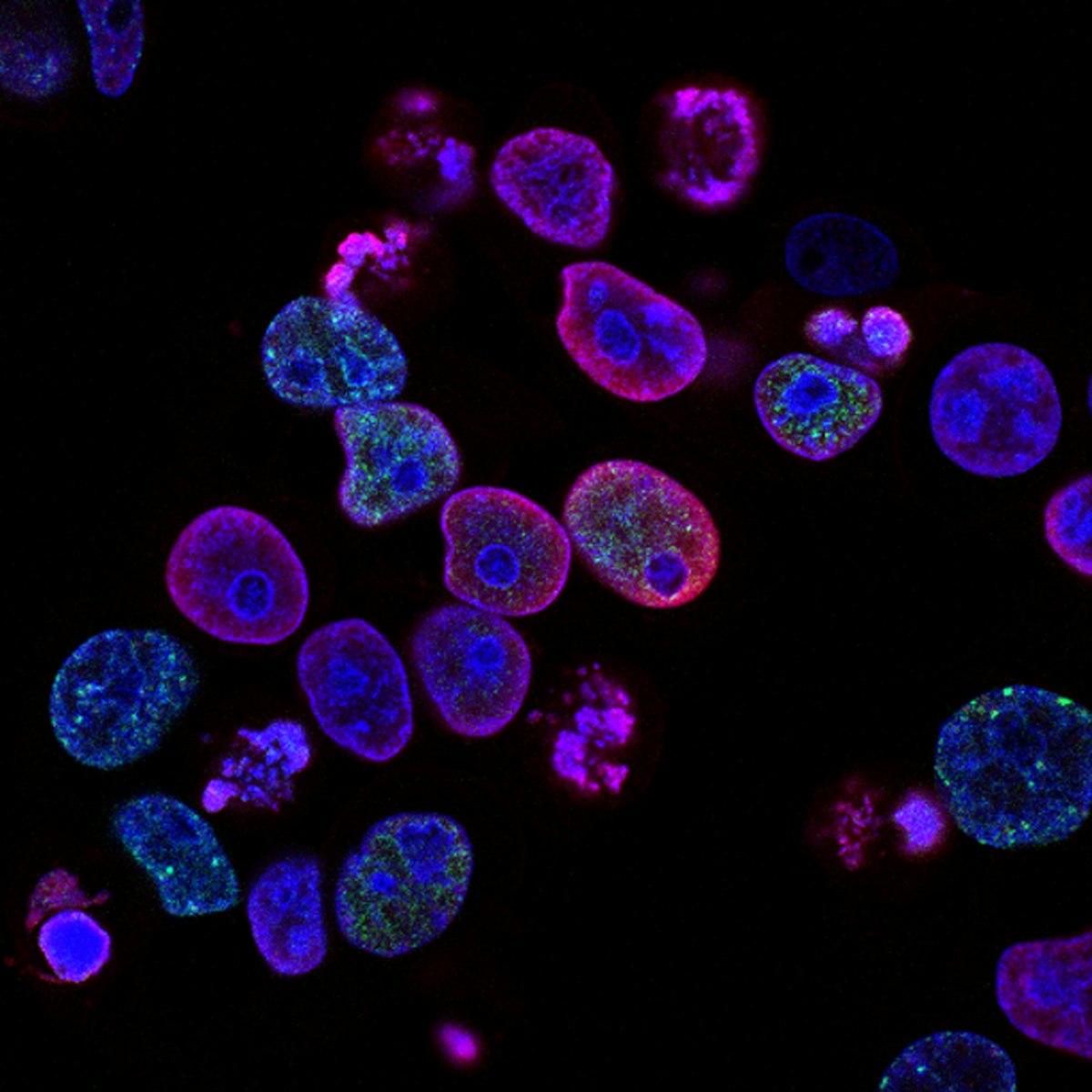
On September 9, 2026, Nature published ProteinTalks, a system aiming to behave as a virtual cell from a massive corpus: more than 38 million temporal protein-abundance measurements on perturbed breast-cancer cell lines. Neural Pulse reads the work as predictive infrastructure, not an automatic substitute for clinical trials.
Temporal scale matters. This is not only a static proteomic snapshot, but abundance trajectories under stimuli—drugs, knockdowns, or other perturbations—that enable modeling dynamics rather than only cross-sectional correlation at one instant.
Declared applications include predicting drug efficacy, detecting compound synergies, identifying resistance-associated proteins, and transfer signals toward organoids and clinical contexts. Each needs distinct validation; blending them into one headline would mislead.
DOI 10.1038/s41586-026-11001-9 places the paper in Nature, with the review and supplement standards that implies. Still, translational usefulness will be measured on external cohorts and honest failures, not only manuscript figures.
For translational oncologists, a useful virtual cell shrinks the combination space to test in expensive organoids. For computational pharmacologists, it offers a quantitative prior on resistance networks. Both should demand calibration by breast molecular subtype—luminal, HER2+, triple-negative—before generalizing.
Biological limits: cell lines are not heterogeneous tumors with stroma, immunity, and whole-body pharmacokinetics. ProteinTalks may excel in-domain and degrade on real biopsies. The paper must be read with that border explicit.
More than 38 million measurements raise data-quality questions: batch normalization, instrument drift, protein coverage, and missing-value handling. A brilliant model on biased data exports bias to the clinic with more unjustified confidence.
Drug synergy is the most seductive claim and the easiest to over-interpret. Neural Pulse recommends checking whether predicted synergies hold on independent dose matrices and whether the model distinguishes synergy from simple additivity.
Predicted resistance proteins should become wet-lab hypotheses and, eventually, biomarkers with clinical utility. Without that chain, the model is a pretty map. With it, it can guide combination trials.
Transfer to organoids and clinical data is the narrative bridge toward patients. It requires cohorts with comparable temporal proteomics—rare and costly—or well-reported domain-adaptation strategies. Without transfer numbers, the bridge is metaphor.
Ethics and dual-use are milder here than for offensive chemical agents, but model-assisted design of cytotoxic combinations still needs institutional oversight. Hospitals and CROs should integrate ProteinTalks under patient-data governance.
In September 2026’s landscape, ProteinTalks joins AlphaGenome Atlas and other biological foundation models: systems biology is moving from one-off papers to queryable predictive platforms. Competition will turn on access to high-quality longitudinal data.
Closing: ProteinTalks builds a virtual cell from >38 million temporal protein measurements on perturbed breast lines, with a September 9, 2026 Nature DOI, aiming at efficacy, synergy, resistance, and transfer. The decisive exam is external validation, not corpus size.
Next: open or controlled data, inference code, subtype benchmarks, and prospective trials measuring whether predicted synergies save real screening cycles.
Neural Pulse notes that September 2026 rewards whoever combines demonstrable capability with verifiable operational controls: proper names, dates, magnitudes, honest limits, and exportable telemetry over keynotes without artifacts. Responsible teams document assumptions, success metrics, rollback plans, and kill-switch owners before the first pilot with sensitive data or irreversible side effects. Those who ignore that discipline will renegotiate SLAs, insurance premiums, and reputation when the first serious incident crosses the technical perimeter or the public narrative of customers, regulators, and trade press. Independent verification remains scarce, so contractual audit rights and domain-specific evaluation sets matter as much as vendor scorecards.
Neural Pulse notes that September 2026 rewards whoever combines demonstrable capability with verifiable operational controls: proper names, dates, magnitudes, honest limits, and exportable telemetry over keynotes without artifacts. Responsible teams document assumptions, success metrics, rollback plans, and kill-switch owners before the first pilot with sensitive data or irreversible side effects. Those who ignore that discipline will renegotiate SLAs, insurance premiums, and reputation when the first serious incident crosses the technical perimeter or the public narrative of customers, regulators, and trade press. Independent verification remains scarce, so contractual audit rights and domain-specific evaluation sets matter as much as vendor scorecards.
Neural Pulse notes that September 2026 rewards whoever combines demonstrable capability with verifiable operational controls: proper names, dates, magnitudes, honest limits, and exportable telemetry over keynotes without artifacts. Responsible teams document assumptions, success metrics, rollback plans, and kill-switch owners before the first pilot with sensitive data or irreversible side effects. Those who ignore that discipline will renegotiate SLAs, insurance premiums, and reputation when the first serious incident crosses the technical perimeter or the public narrative of customers, regulators, and trade press. Independent verification remains scarce, so contractual audit rights and domain-specific evaluation sets matter as much as vendor scorecards.
Neural Pulse notes that September 2026 rewards whoever combines demonstrable capability with verifiable operational controls: proper names, dates, magnitudes, honest limits, and exportable telemetry over keynotes without artifacts. Responsible teams document assumptions, success metrics, rollback plans, and kill-switch owners before the first pilot with sensitive data or irreversible side effects. Those who ignore that discipline will renegotiate SLAs, insurance premiums, and reputation when the first serious incident crosses the technical perimeter or the public narrative of customers, regulators, and trade press. Independent verification remains scarce, so contractual audit rights and domain-specific evaluation sets matter as much as vendor scorecards.
Neural Pulse notes that September 2026 rewards whoever combines demonstrable capability with verifiable operational controls: proper names, dates, magnitudes, honest limits, and exportable telemetry over keynotes without artifacts. Responsible teams document assumptions, success metrics, rollback plans, and kill-switch owners before the first pilot with sensitive data or irreversible side effects. Those who ignore that discipline will renegotiate SLAs, insurance premiums, and reputation when the first serious incident crosses the technical perimeter or the public narrative of customers, regulators, and trade press. Independent verification remains scarce, so contractual audit rights and domain-specific evaluation sets matter as much as vendor scorecards.