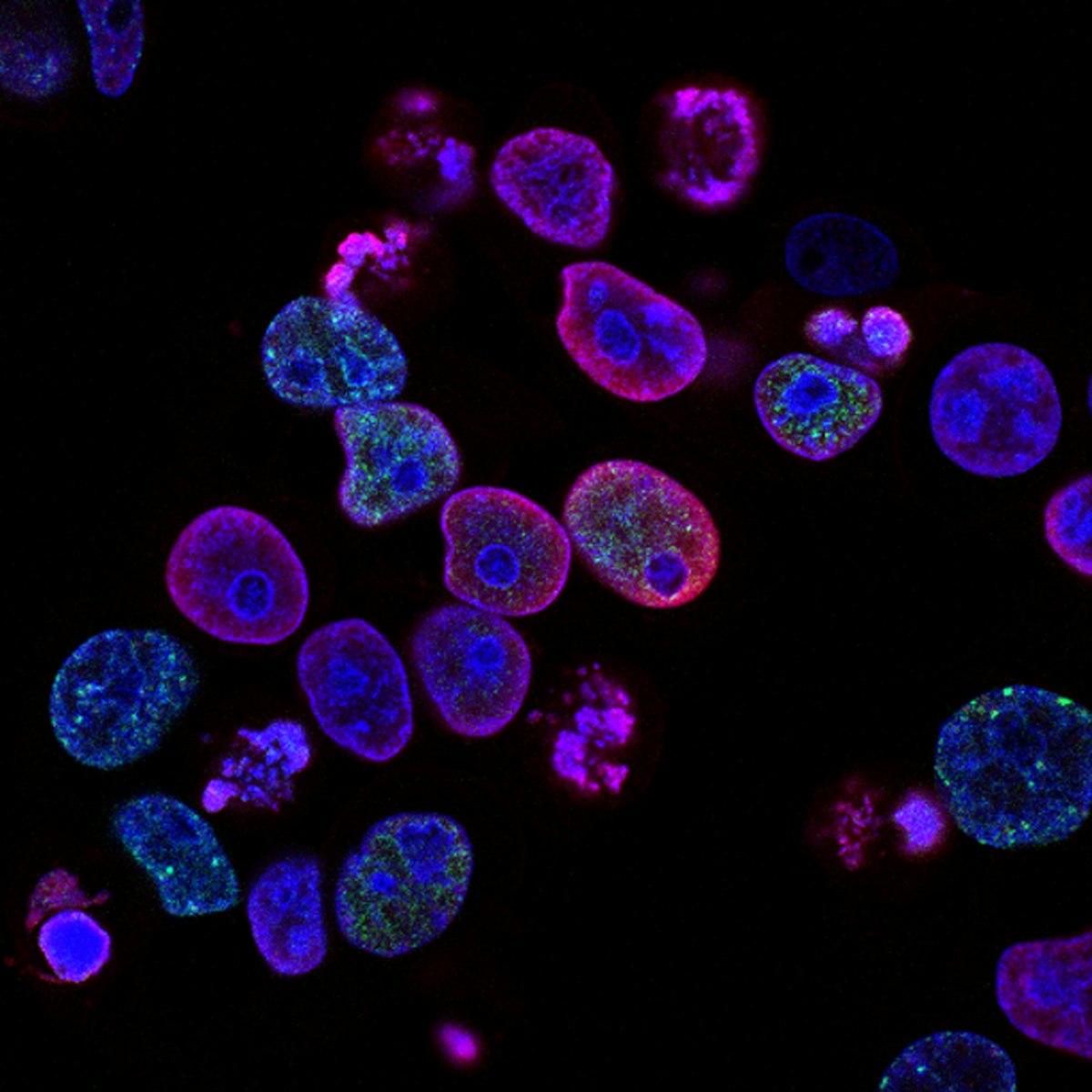
In mid-September 2026, Phys.org coverage and a Science publication on TranscriptFormer—led from the Stanford/CZI ecosystem with Stephen Quake among associated figures—presented a generative cell atlas spanning about 1.5 billion years of evolution. The TF-Metazoa version was trained on approximately 112 million cells from 12 species, enabling cross-species cell-type and state mapping in zero-shot modes.
TranscriptFormer sits as a generative successor to Universal Cell Embedding (UCE), a prior ~650M-parameter foundation model trained on tens of millions of cells across fewer species. TF-Metazoa reports on the order of 444 million trainable parameters plus ~633 million in frozen embeddings, a vocabulary of hundreds of thousands of gene/transcriptional tokens, and a deep transformer architecture aimed at single-cell transcriptomics.
The scientific promise is to ask: «this zebrafish cell—what human state does it resemble?» or to transfer disease labels between model organisms and human tissues without retraining from scratch. That speeds comparative biology, toxicology, and target discovery: a marker found in mouse can project into human cell space with less friction.
Code and weights are distributed via the czi-ai/transcriptformer project and the Virtual Cells Platform, with documented download commands (e.g., transcriptformer download tf-metazoa). The relative openness—typical of the Chan Zuckerberg Initiative’s virtual-cell work—aims to let labs without their own clusters run inference, even if original training remains a large-infra privilege.
Limits: 12 species do not cover all biodiversity; atlas biases (overrepresented tissues, differing sequencing protocols) can align spurious «equalities»; and a universal embedding does not replace functional validation. Mapping cells across species also raises ethics questions when prioritizing primate or human experiments from animal data.
On the 2026 biological foundation-model landscape, TranscriptFormer competes with and complements «virtual cell» and perturbation-model approaches. Its differential angle is evolutionary depth (1.53 billion years cited) and the 112M-cell scale. That pushes it closer to a generative atlas than a narrow single-tissue classifier.
For translational medicine, near-term utility may lie in rare disease and comparative oncology: finding cellular analogues of a human tumor in organisms where genetics is more editable. Also in regulatory toxicology, where reducing animal testing requires models that extrapolate cell states with transparent uncertainty.
The Science paper (doi 10.1126/science.aec8514) raises the review bar. The community will watch zero-shot classification benchmarks, disease-state identification, and robustness to batch effects. If numbers hold, TranscriptFormer becomes a default dependency in multi-species single-cell pipelines; if not, it remains a citational milestone.
Operationally, integrating TF-Metazoa implies data governance: many atlases mix donors, consents, and jurisdictions. Re-identifying individuals from transcriptomes is a residual risk. Institutions must couple the model to access controls and fair-use policies for human data, not only to GPUs.
Alongside QuantaMind and MutexaGPT, TranscriptFormer completes a dense week of «AI that touches hard biology»: reacting molecules, designed enzymes, cells mapped across species. The through-line is anchoring generators to massive physical/biological data, not only text. That anchoring is the difference between hype and a lab tool.
Education and open science benefit if Virtual Cells Platform tutorials lower the barrier. The risk is a new gap: groups that can fine-tune transcriptomic transformers versus clinics that only consume pretty UMAPs. Bioinformatics training programs should include critical evaluation of cross-species embeddings.
In sum, TranscriptFormer/TF-Metazoa (Science / Phys.org, ~14 Sep 2026) offers a generative atlas trained on ~112M cells and 12 species to map cell types and states across evolution. It is a cell-biology foundation model with weights available via CZI. Neural Pulse will follow independent benchmarks and concrete clinical or toxicology uses.
As more labs download TF-Metazoa, cancer, neuro, and plant fine-tune forks will appear. The community must avoid incompatible fragmentation: shared metadata schemas and public benchmarks will help. By releasing weights, CZI and Stanford implicitly assume a steward role for the virtual-cell ecosystem; documentation and versioning will be as critical as the Science paper.
Finally, cross-species mapping must not be used to justify experimental leaps without ethics: a cellular analogue in one organism does not automatically authorize an invasive assay in another. Ethics boards will need to update protocols for biological foundation models. TranscriptFormer expands what is possible; governance must expand what is permissible with equal rigor.
Public benchmarks should include held-out species and rare tissues to avoid overfitting to mouse and human. Only then will we know whether the 112-million-cell atlas generalizes or memorizes. The Virtual Cells Platform can host leaderboards that keep the zero-shot claim honest.