
Deep Blue beats Kasparov (1997): brute-force search on the world stage
On May 11, 1997, IBM’s Deep Blue defeated Garry Kasparov in a six-game match—a media milestone for AI.
Sorted by date · America/Guayaquil timezone
Page 36 / 38 · 447 articles
On May 11, 1997, IBM’s Deep Blue defeated Garry Kasparov in a six-game match—a media milestone for AI.

SVMs from Vapnik and colleagues dominated 1990s–2000s classification with maximum margins and kernels.
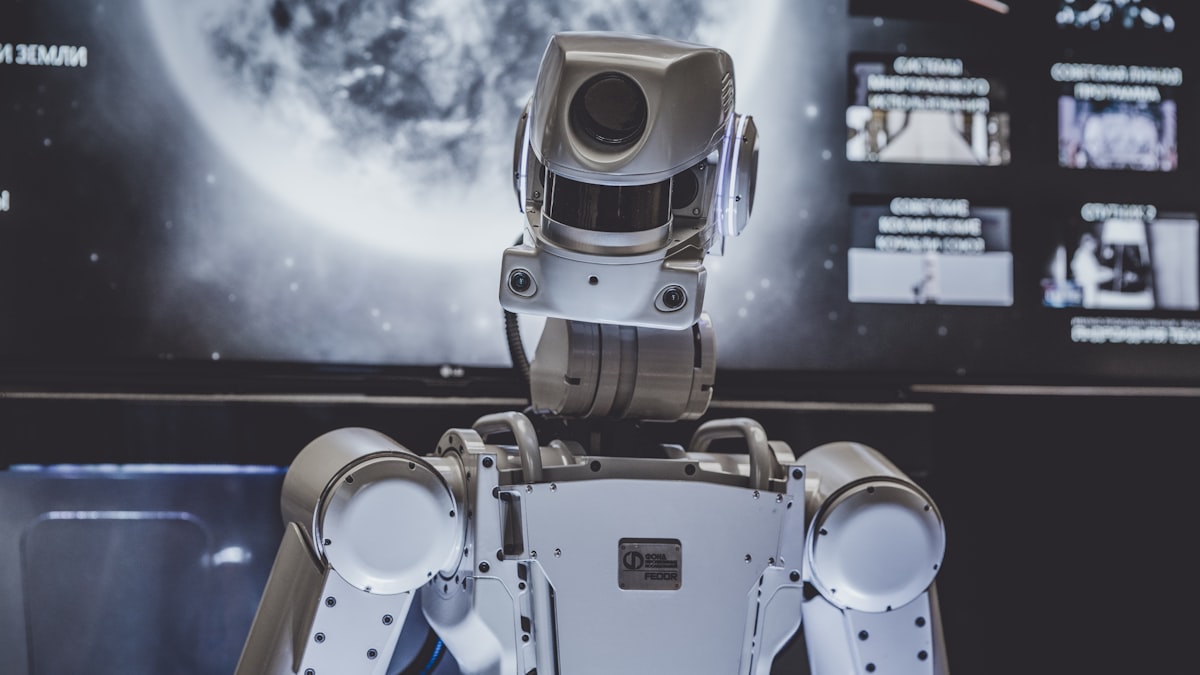
IBM’s statistical machine-translation models based on alignments marked NLP’s data-driven turn.

Gerald Tesauro trained a TD-lambda network for backgammon, reaching elite level without massive hand-coded expertise.

In the late 1980s–90s, LeCun and colleagues applied convolutional networks to zip-code and check recognition.

The Lisp-machine and expert-shell market contracted; AI retreated to labs while statistical ML grew quietly.

Pearl popularized Bayesian networks for reasoning under uncertainty and later drove the causal-inference revolution.

Rumelhart, Hinton, and Williams popularized gradient descent via error backpropagation in multilayer networks.

John Hopfield linked recurrent nets to spin systems, inspiring a wave of energy-based models in AI.

MITI launched FGCS to lead “intelligent” computers based on logic programming; the real outcome was mixed and costly.

Feigenbaum argued that expert AI power lies in encoded domain knowledge, not only generic search mechanisms.

1970s–80s expert systems captured domain knowledge in rules; DENDRAL and MYCIN were emblematic cases.